
Indigenous 5G Mobile Packet Core Software Stack
The IIT Bombay 5G Core is a full-featured, cloud-native software stack that implements the core network functions required for 5G communication. Developed entirely in India using open standards and tools, it enables high-performance mobile core networking without relying on foreign IP. The system supports containerized and virtual deployments, low-latency user plane optimization, and interoperability with existing RAN/UE hardware. It has been integrated into the national 5G Testbed project and licensed to commercial partners.
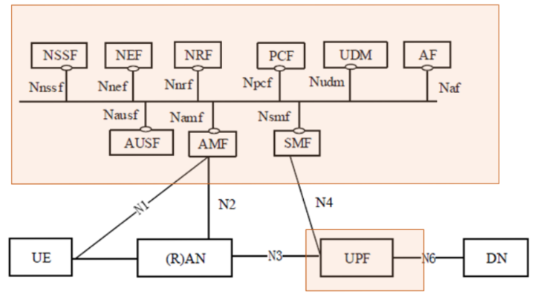
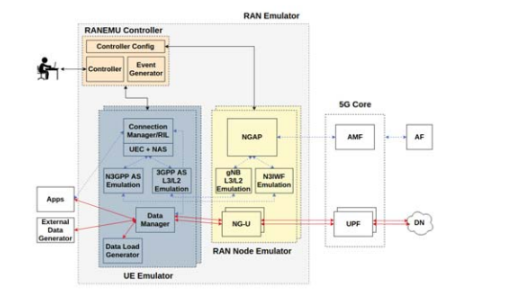
There is a need to develop an indigenous 5G core network that can be used as a proof-of-concept for future commercial implementations and a prototype to test future research ideas. India needs to have an indigenous 5G solution for many reasons, but an indigenously developed 5G core is critical given the security implications. Having an Indian, secure 5G core will be especially important for networks like defence and police.
Currently, any commercial grade 5G core network implementation that Indian academia or industry can use does not exist or is not available at a reasonable price. With their collaborators, the team has developed a solution that is part of and fully integrated with the larger end-to-end indigenous 5G/5Gi network. The solution is fully standards-compliant and has been tested with third-party components for interoperability. The 5G core components follow a cloud-native, high performance, scalable design and follow all other industry best practices.
The system comprises Access and Mobility Management Function (AMF), Session Management Function (SMF), User Plane Function (UPF), Authentication Server (AUSF), and Network Repository (NRF). The data plane is optimized with DPDK and achieves high throughput. The stack was tested using commercial UEs, simulated gNBs, and integrated within the CeWIT-led 5G Testbed project. Performance has been validated in lab and pilot conditions.
The system comprises Access and Mobility Management Function (AMF), Session Management Function (SMF), User Plane Function (UPF), Authentication Server (AUSF), and Network Repository (NRF). The data plane is optimized with DPDK and achieves high throughput. The stack was tested using commercial UEs, simulated gNBs, and integrated within the CeWIT-led 5G Testbed project. Performance has been validated in lab and pilot conditions.
- Indian startups and software companies: This 5G core can help Indian companies build their own telecom products instead of just offering services—giving them a chance to compete in a space that’s mostly dominated by foreign players.
- Smart factories and industries: As more factories use private 5G to connect machines and sensors, this core software can power those networks, helping industries become more efficient and modern.
- New Indian telecom product development: It supports the creation of high-tech, made-in-India products—boosting self-reliance and reducing the need to import telecom systems.
- Telecom research and future standards like 6G: With in-house 5G development, Indian companies and researchers can contribute more to global telecom standards and shape future technologies.
- Engineering colleges and research labs: Students and researchers can use this tech to learn about real telecom systems, work on new ideas, and get skilled in an important and growing field.
- Government and public communication networks: Since this is developed in India, it’s secure and ideal for use in sensitive areas like defence, disaster response, and government networks.
- Smart cities and urban tech projects: The 5G core can support large-scale projects like smart traffic systems, pollution sensors, and public safety networks in cities.
- Indian telecom hardware makers: It can help manufacturers build full 5G systems by giving them a strong, reliable software base to go with their hardware.
- Developing countries: Indian companies can use this technology to offer affordable and high-quality telecom solutions in other countries that need them.