IIT Bombay Researchers Engineer an Economic and Efficient Catalyst to Split Water Molecules
By combining cobalt, nickel, and graphite, using molecular precursor engineering, researchers have engineered a low-cost, highly durable catalyst that efficiently splits water into hydrogen and oxygen, paving the way for affordable green hydrogen energy.
The Hard Truth about the Role of Soft Tissue in Brain Cancer Relapse
By mimicking the brain’s softness in the laboratory, researchers uncover why brain cancer relapses, and what standard lab dishes had been hiding all along.
IITB Researchers Develop Novel Method to Test the ‘Quantumness’ of Gravity
Researchers have suggested that gravity could hide its quantum nature by freezing its motion, rendering traditional entanglement tests insufficient, and have proposed a new measurement tool to detect these hidden signatures.
Researchers Develop High-Precision AI System to Predict Flood Depths
Researchers from IIT Bombay have developed a dual machine learning framework using satellite radar and elevation data to predict flood susceptibility and estimate flood water depths at a 30-meter resolution across South India's vulnerable Western Ghats region.
Twist in Light Enhances Chiral Discrimination
Researchers from IIT Bombay led by Prof. Gopal Dixit, Department of Physics; Tata Institute of Fundamental Research (TIFR) and IIT Hyderabad have developed a novel optical technique to distinguish between mirror-image molecules, known as enantiomers, using specially structured “twisted” laser light. Published in Science Advances, the study demonstrates that laser beams carrying orbital angular momentum interact differently with chiral molecules depending on their handedness.
IIT Bombay Researchers Achieve Cost Reduction while Developing Mechanically Superior and Sustainable Plastics
Researchers at the Indian Institute of Technology Bombay have developed a host of novel, eco-friendly materials by combining everyday plastics with strong and biodegradable materials, like wild grasses.
How a Tiny Molecule Can Prevent Excess Fat in Blood
By disrupting transport of fat inside liver cells, IIT Bombay researchers have opened a new path to tackling high cholesterol and other fat-related disorders.
Unlocking High-Frequency Surface Acoustic Waves in Silicon: A New Frontier for Phononic and Quantum Devices
Surface acoustic waves (SAWs) −tiny elastic vibrations that travel along the surface of a solid−are the unsung heroes of modern wireless technology, powering the radio-frequency filters in every smartphone. As wireless communication advances towards 5G, 6G, and millimeter-wave (mm-wave) technologies, there is growing demand for compact, low-loss, and ultra-high-speed signal-processing devices compatible with existing silicon electronics.
A living nano-assembly to tackle pollution from stubborn textile dyes in wastewater
By pairing marine bacteria with graphene oxide sheets, IIT Bombay researchers show how dyes in wastewater can be trapped and fully broken down.
Heatwaves in the Indo-Gangetic Plains: Why Local Land and Atmospheric Conditions Matter More Than We Thought
IIT Bombay research shows that heatwaves over the Indo-Gangetic Plains are primarily driven by local land and atmospheric factors, rather than by hot air travelling from elsewhere.
A New Way to Make Old Antibiotics Work Again
A DNA-based strategy from researchers of Indian Institute of Technology Bombay makes drug-resistant bacteria responsive to antibiotics again.
Indian Institute of Technology Bombay Study Finds Why Our Current Methods of Testing Hydrogen-Ready Metals are Inaccurate
Researchers have identified how common testing errors lead to unreliable data, providing a new blueprint for building the ultra-safe infrastructure needed for a hydrogen-powered world.
The Geometry of Surgery: Turning Flat Images into 3D Pathways
Researchers from the Indian Institutes of Technology have developed a computationally efficient method to track the three-dimensional movements of surgical instruments using only standard two-dimensional video feeds and geometric principles.
Why do some antibiotics cause liver damage more than others?
IIT Bombay study shows how the location of antibiotics within the outer layers of liver cells could predict drug-induced toxicity early.
Accurate Shrinkage Prediction for Kiln-Heated 3D-Printed Parts
Researchers have developed advanced mathematical models and hybrid machine learning tools that accurately predict how 3D-printed ceramic and metal parts shrink and warp during high-temperature heat treatment.
IIT Bombay’s new study shows the mucus paradox in our lungs
Researchers at IIT Bombay reveal how excessive mucus creates gaps in our lungs’ defences, leaving us vulnerable to allergic attacks.
Improving How Immune Cells are Prepared for Cancer Care
Researchers at IIT Bombay develop a simpler and efficient method to recover immune cells grown in the lab for T-cell–based cancer therapies.
Making Sense of the Human Brain: How BrainProt and DrugProtAI Aim to Help Researchers Decode Brain Diseases
A smart new platform developed by IIT Bombay unifies scattered brain-disease data to help researchers find markers, explore treatments, and pinpoint druggable targets.
Tabletop robot twins unlock the mystery of how microbes perform the run-and-tumble motion
Researchers successfully developed a robotic model that spontaneously generates tunable and accurate run-and-tumble dynamics, similar to those of swimming microbes.
Sunlight-charged, wearable “Thermal Battery”
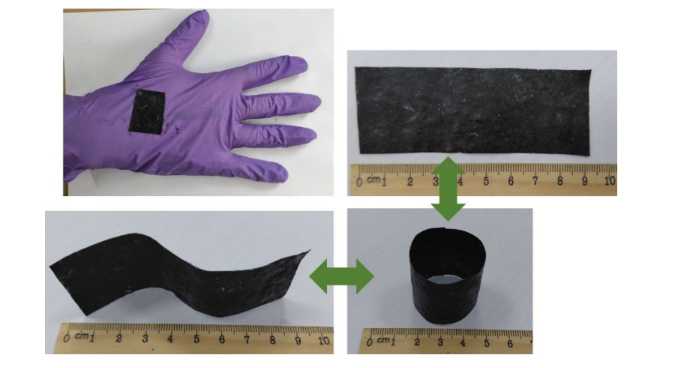
Warm clothing, like a sweater, protects us in cold climates by trapping the natural body-heat and thereby minimizes its loss to the cold environment outside. Turns out that there might be another smarter and sustainable way to keep ourselves warm during cold nights.