
A simple paper strip and handheld reader together let anyone check good (HDL) and bad (LDL) cholesterol in a tiny drop of blood—no lab, no costly machines, no experts needed. The strip soaks up 20 μL of blood, filters out cells, and uses a special color-changing chemical mix to show cholesterol levels. The reader measures the shade and displays results in about seven minutes.

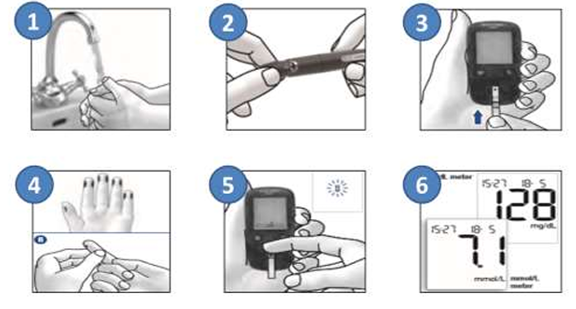
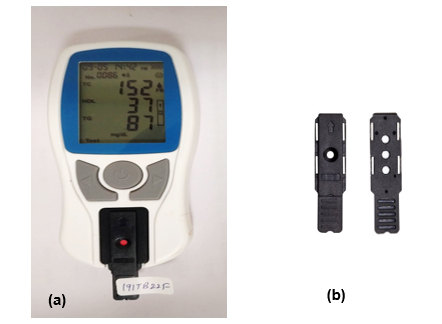
Figure (1) Colorimetric test strip of the present invention; (2) Point-of-care device comprising the colorimetric test strip in accordance with an embodiment of the invention; (3) Actual images (3a) Electronic reader (3b) Test strips
Heart diseases are one of the top causes of death worldwide, especially in India. Many people don’t know they have unhealthy cholesterol levels because they either can’t travel to a lab or don’t have access to proper testing in their area. Traditional cholesterol tests are done in large labs, take time, require skilled staff, and use expensive machines—making regular health monitoring difficult for most people.
- Easy-To-Read Color Strip: Product uses a small paper strip that turns different shades based on HDL and LDL amounts, letting users see results by eye or via a reader.
- Selective Chemical Mix: This feature combines a soap‑like molecule with enzymes to react only with “good” HDL, avoiding interference from other blood components.
- Built-In Blood Filter: Design includes a thin membrane that holds back red blood cells, letting only clear plasma reach the color pad—no spinning in centrifuge needed.
- Compact Electronic Reader: Prototype reader houses LEDs, a light sensor, and simple electronics to translate strip color into a digital value and save it on an SD card.
- Rapid, One-Step Test: Entire process—from adding blood to getting a number—takes under ten minutes, cutting wait times and helping people act fast on their health.
A working prototype consists of the paper strip mounted in a plastic cartridge and a pocket-sized reader built on an Arduino Mega board. LEDs shine light on the strip at a fixed angle; a photodiode measures reflected intensity, converts it to cholesterol concentration, and shows it on an OLED screen. The unit also logs past readings with timestamps.
The prototype has been successfully built and tested using both real and standard samples. The reader device works with a test strip and provides digital results in about 7 minutes.
7
Wider access to fast cholesterol checks empowers people in rural villages and urban homes alike to track heart-health risks regularly. Early warning leads to lifestyle changes or treatments sooner, reducing heart attacks. Healthcare costs drop by avoiding repeated lab visits, and community clinics can offer point-of-care screening, improving public health monitoring and preventing complications.
- Primary healthcare
- Rural and remote health centers
- Home diagnostics
- Medical device industry
- Public health programs
Geography of IP
Type of IP
202021028730
552687