
The invention discloses a bi-layered skin scaffold composed of a chitosan-gelatin-based lyophilized film as the epidermal layer and a cryogel-based porous dermal layer. The dermal layer is reinforced with eggshell membrane (ESM) and incorporates rutin nanoparticles to impart antioxidant and wound-healing properties. The scaffold is entirely biodegradable, biocompatible, and does not require chemical crosslinkers. Designed to mimic the natural structure of skin, the scaffold promotes cell adhesion, proliferation, and tissue regeneration, making it suitable for treating burns, chronic wounds, and other skin injuries.
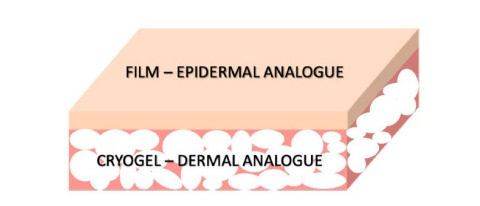
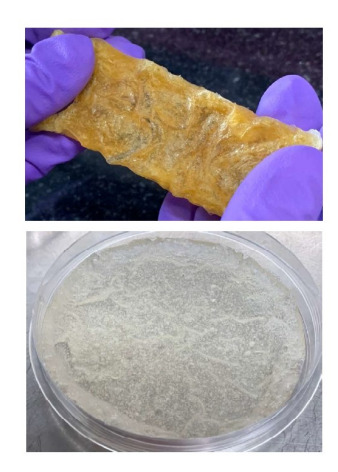
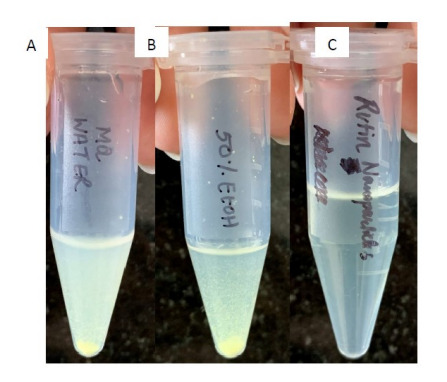
Figure (1) Schematic of bi-layered dermo-epidermal scaffold; (2) Glutaraldehyde crosslinked cryogel (Top) and ESM incorporated cryogel (Bottom); (3A) Rutin powder dissolved in water, (3B) Rutin powder dissolved in 5:5 ethanol-water mixture, (3C) Rutin nanoparticles dissolved in 5:5 ethanol-water mixture.
Severe skin injuries such as burns and chronic wounds often require external scaffolds for healing, but currently available skin substitutes like allografts and xenografts are expensive, may trigger immune responses, and carry a high risk of infection. Additionally, existing synthetic or semi-synthetic scaffolds often involve cytotoxic crosslinkers and lack the structural and functional complexity of native skin. There is an urgent need for a low-cost, biocompatible, biodegradable, and bioactive skin scaffold that mimics the natural skin architecture and supports efficient tissue regeneration without the limitations of conventional treatments.
- Bi-Layered Scaffold Composition: The design consists of a lyophilized non-porous epidermal analogue and a porous cryogel-based dermal analogue that mimics natural skin structure.
- Natural and Non-Toxic Crosslinking: The scaffold formation avoids synthetic chemical crosslinkers and employs eggshell membrane (ESM) as a natural agent for structural integrity and gelation.
- Incorporation of Rutin Nanoparticles: Rutin nanoparticles are physically embedded within the dermal layer to provide sustained antioxidant, anti-inflammatory, and wound-healing properties.
- Enhanced Cell Interaction and Scaffold Stability: The composition enhances cell adhesion, proliferation, and extracellular matrix deposition, facilitating complete and effective wound closure.
- Fully Biodegradable and Cost-Effective: It is composed of low-cost, naturally derived polymers such as gelatin and chitosan, and is designed for single-use applications without the need for surgical removal.
The prototype bi-layered skin scaffold was fabricated using natural polymers. The epidermal layer was prepared by casting a mixture of gelatin, chitosan, and glycerol into a petri dish, followed by drying and lyophilization to form a thin, non-porous film. For the dermal layer, a cryogel mixture containing chitosan, gelatin, glycerol, eggshell membrane (ESM) powder, and rutin nanoparticles was added to the dried epidermal film. This composite was subjected to cryogelation and lyophilized to produce a porous, mechanically stable dermal layer. Scanning electron microscopy confirmed bilayer formation, uniform porosity, and nanoparticle incorporation. The scaffold demonstrated good tensile strength, moisture retention, and cytocompatibility in vitro. In vivo biocompatibility and full thickness wound excision model studies demonstrated promising results.
The scaffold has been developed and characterized at the laboratory scale. SEM and TEM imaging confirm successful bilayer formation and nanoparticle embedding. Cell culture assays and in vitro wound healing models validate biocompatibility and functionality. In vivo wound healing assessment in rat model showed potential use of such bi-layered construct as a skin substitute. The technology is ready for pilot-scale prototyping and preclinical validation.
4
This bi-layered scaffold offers an affordable, biocompatible, and biodegradable alternative to conventional skin grafts and commercial dressings, many of which are expensive, immunogenic, or difficult to access in resource-limited settings. By using natural, low-cost materials and avoiding toxic crosslinkers, the invention addresses a critical healthcare gap in the treatment of burns and chronic wounds, particularly in low- and middle-income countries. Its ease of fabrication, enhanced healing potential, and complete biodegradability reduce the need for secondary interventions, improving patient outcomes and supporting accessible wound care solutions.
- Bi-layered scaffolds for burn and trauma care: The scaffold mimics natural skin structure and promotes regeneration, making it ideal for treating burn injuries and traumatic skin loss.
- Advanced wound dressing products: Its bioactive and biodegradable design enables it to function as a next-generation dressing for complex wounds with prolonged healing needs.
- Skin tissue engineering and grafting: The scaffold serves as a functional skin substitute by supporting cell adhesion, proliferation, and extracellular matrix formation.
- Chronic wound management (e.g., diabetic ulcers): The scaffold’s porous dermal layer and antioxidant-loaded composition aid healing in non-healing wounds like diabetic foot ulcers.
- Affordable healthcare and surgical solutions: By using low-cost, naturally derived materials, the scaffold provides an accessible solution for skin repair in resource-limited settings.
- Medical device and biomaterials industry: The scaffold offers commercial potential as a bioengineered implantable material in wound care and regenerative medicine sectors.
Geography of IP
Type of IP
202121010325
558404