
A smart new platform developed by IIT Bombay unifies scattered brain-disease data to help researchers find markers, explore treatments, and pinpoint druggable targets.
Researchers and clinicians studying brain diseases such as Alzheimer’s, Parkinson’s, or brain tumours face a familiar challenge: the information they need is widely available, but rarely connected. Understanding how brain diseases develop requires linking clinical observations with molecular evidence, including genes, proteins, biomarkers, and experimental data generated across thousands of studies.
Each new study adds gene expression profiles, protein measurements, or patient-derived observations. However, these datasets remain scattered across independent gene and protein databases, biomarker repositories, drug resources, and clinical trial registries. Researchers and clinicians often spend a lot of time searching scattered resources and manually connecting information. This fragmented approach can obscure important biological relationships, slowing progress in understanding disease mechanisms and how the healthy human brain changes during disease progression.
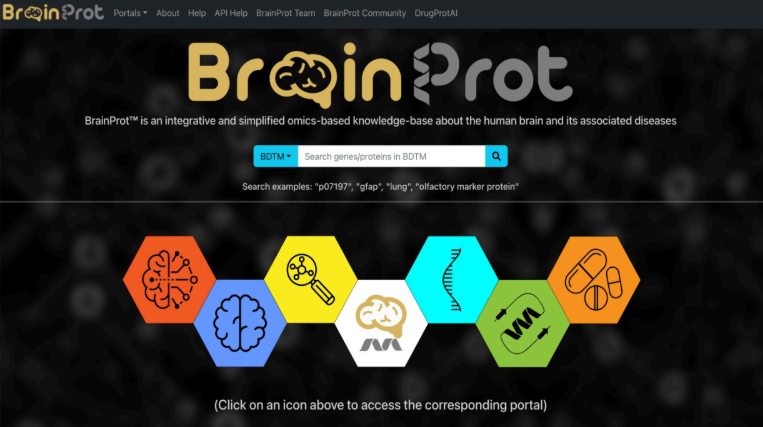
A research team at the Indian Institute of Technology Bombay, led by Prof. Sanjeeva Srivastava from the Department of Biosciences and Bioengineering, in collaboration with researchers from different research institutes in India and abroad, has developed BrainProt v3.0, a database that combines various types of biological data—from genes to proteins—into a single platform to enable systematic insights into human brain function in both healthy and diseased states.
BrainProt is the first system to integrate multi-disease data from genomics, transcriptomics, proteomics, and biomarker research and multi-database information into one portal. Genomics, transcriptomics, and proteomics refer to the study of the complete set of DNA, RNA, and proteins within a cell, tissue, or organism, rather than looking at an individual gene, RNA transcripts, or protein, respectively. “BrainProt also includes resources to identify and understand protein expression differences between the left and right hemispheres of the human brain across 20 neuroanatomical regions. This is the first resource of its kind,”says Prof. Sanjeeva Srivastava.
The integration of ‘multi-omics’ data significantly reduces the time required to analyse complex data and identify meaningful patterns that can reveal disease-related changes in genes and proteins, clarify biological pathways involved in brain disorders, and highlight key genes and proteins driving disease processes. BrainProt allows comparing the data for different diseases. The insights generated through BrainProt may support the discovery of therapeutic targets and opportunities for drug repurposing.
BrainProt includes data on 56 human brain diseases and 52 multi-omics datasets derived from more than 1,800 patient samples. These datasets include transcriptomic data for 11 diseases and proteomic data for six diseases. For each disease, users can examine genes and proteins frequently associated with the disease, assess how strongly these genes and proteins are already supported by existing medical and scientific databases, and how their activity levels change in patient samples.“New ideas and experiments truly resonate when research outcomes are accessible to stakeholders to explore, visualise, interpret and use. This philosophy is why we integrated the information into a user-friendly platform,” says Dr. Deeptarup Biswas, lead author of the BrainProt study.
In biomedical research, there may be research bias, where researchers and clinicians may often preferentially consider a small set of extensively studied genes and proteins as disease targets, overlooking other, less-studied but still biologically relevant genes and proteins. “By putting all these tools (genomics, transcriptomics and proteomics, and biomarker analysis) together, you can instantly see which markers repeatedly appear across algorithms and where research biases may exist,” says Dr. Ankit Halder, co-author of the study. BrainProt helps researchers identify markers that are truly well supported by multiple lines of evidence and those that may be under- or over-studied due to historical research focus.
To quantify how strongly a gene is associated with a specific brain disease in the scientific literature, the system calculates the Brain Disease Marker Curator (BDMC) score. The BDMC score is disease-specific: for each disease, every gene is assigned a score that reflects how consistently it has been reported as relevant to that disease across multiple curated databases and literature-mining algorithms. “We wanted to ensure that the algorithms can identify the most relevant markers from thousands of proteins/genes - much like finding a needle in a haystack,” says Mr. Sanjyot Vinayak Shenoy, co-developer of BrainProt. The researchers confirmed the system's accuracy by showing that well-known disease markers—such as amyloid precursor protein for Alzheimer’s and EGFR for glioma—were correctly assigned a high score and ranked at the very top.
BrainProt presents these results: marker rankings, expression patterns in patient samples, and links to external databases are displayed together on a single interface. This integrated view accelerates pattern recognition and helps researchers quickly verify previous findings without manually cross-checking multiple websites. BrainProt includes the Brain Disease Drug Finder (BDDF), a comprehensive catalogue of drugs, chemicals, and clinical trials for 53 brain diseases.
BDDF links treatments to their molecular targets and highlights where experimental therapies have succeeded, stalled, or been discontinued. Importantly, if an existing drug already targets a similar protein, early safety testing can often be skipped because the drug has been tested in humans, allowing researchers to focus on whether it works for a new brain disease and potentially saving years of development time.
Additionally, the IIT Bombay team developed DrugProtAI. “We wanted to use AI and ML techniques to understand whether a protein can be druggable (has the biological and physical characteristics needed to be a useful drug target) before doing costly experiments,” says Dr. Halder. This is crucial because only about 10% of human proteins currently have an FDA-approved drug, with another 3–4% under investigation.“Before investing years of work in a protein target, DrugProtAI predicts whether the protein is druggable by looking beyond the protein’s sequence, such as cellular location, structural attributes, and other unique characteristics it has,” he adds. The tool generates a “druggability index” —a probability score indicating how likely a protein is to be druggable. A higher score suggests that the protein shares many properties with proteins that already have approved drugs, while a lower score indicates that drug development would be more challenging.
“By integrating DrugProtAI directly into BrainProt, we created a pipeline where researchers can move from identifying a disease marker → examining its expression patterns → evaluating its druggability → exploring existing compounds or clinical trials, all within an hour,” highlights Dr. Halder.
Both BrainProt and DrugProtAI are publicly available and trademarked under IIT Bombay, with the underlying algorithms copyrighted. BrainProt automatically retrieves and incorporates the new information from scientific databases as they are updated. DrugProtAI is rebuilt annually using updated DrugBank releases to validate its predictions against newly approved drug targets. DrugBank is a curated database that links drugs to their molecular targets and clinical status.
The researchers tested DrugProtAI’s predictions by comparing them with newer DrugBank releases published after the model was developed. For example, a protein called integrin-linked kinase does not yet have an approved drug, but DrugProtAI predicted that it could be druggable. Other researchers have cited DrugProtAI to identify high-druggability targets in cardiovascular diseases.
BrainProt and DrugProtAI provide researchers with a clearer, more connected starting point. “We aim to integrate more diverse data types and metadata, along with AI and medical imaging, transforming the platform into a multimodal human brain knowledgebase in the coming years, with the goal of accelerating neuroscience research in India,” informed Dr. Biswas.
Funding information:
The study was supported through the MHRD-UAY Project, MERCK-COE and Department of Biotechnology.
Prof. Sanjeeva Srivastava − Department of Biosciences and Bioengineering, Indian Institute of Technology Bombay