
By mimicking the brain’s softness in the laboratory, researchers uncover why brain cancer relapses, and what standard lab dishes had been hiding all along.
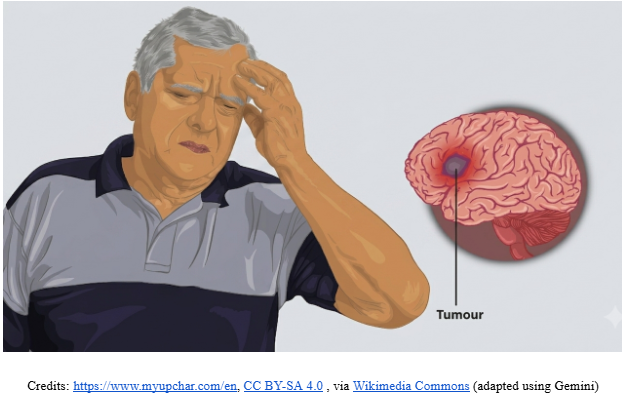
Glioblastoma is among the most aggressive forms of brain cancer— meaning it spreads quickly, resists treatment, and is difficult to remove surgically. It is also one of the hardest to treat, as even after surgery, radiation, and chemotherapy, patients typically survive only six months to a year. The tumour almost always returns, and when it does, it is often faster-growing, more resistant to treatment, and more prone to spreading into surrounding brain tissue.
A series of studies from the mechanobiology laboratory of Prof. Abhijit Majumder at the Indian Institute of Technology Bombay (IIT Bombay) suggests that part of the problem may lie in how scientists study these tumours. The findings of their study point to an explanation for aggressive relapse that extends beyond genetics. The physical softness of the tissue surrounding a tumour, they show, can switch on cancer-promoting genes and conceal potential drug targets that only become visible when cells are studied in conditions that match real brain tissue.
In the first study, led by Prof. Shilpee Dutt from the Advanced Centre for Treatment, Research and Education in Cancer (ACTREC), Tata Memorial Centre (currently at School of Life Sciences, JNU) in collaboration with Majumder’s team, researchers recreated brain tumour relapse in the laboratory, publishing their results in Matrix Biology. To do this, the researchers exposed brain cancer cells to radiation, killing roughly 90% of them. The survivor cells were then cultured and allowed to regrow in the lab, recreating what happens when a tumour returns after treatment.
When these recurrent cells were implanted into mouse brains, they behaved more aggressively than the original tumour cells (also referred to as parent cells), mirroring what clinicians observe in patients. Yet when both parent and recurrent cell populations were each grown separately on conventional rigid plastic culture dishes in the laboratory, both populations behaved identically in tumour growth, invasiveness (how far they spread), or how well they resisted treatment.
“We suspected that the problem lay in the experimental model itself. While the brain is one of the softest tissues in the body, like a jelly, cancer cells are routinely studied on rigid plastic surfaces, as they are convenient, reproducible, and standardised across laboratories,” said Prof. Majumder.
To test whether the mismatch was masking important biology, the researchers grew tumour cells on polyacrylamide hydrogels engineered to match the softness of brain tissue. On these soft gels, recurrent tumour cells revealed an invasive, elongated, fast-moving form that was previously invisible when the same cells were grown on plastic.
“The rigid surface didn’t just dull the cells’ aggressive behaviour, it erased the very distinction between parent and recurrent cells that defines clinical relapse,” says Prof. Dutt.
The consequences of this mismatch extended to which drug targets researchers could discover. While comparing the gene expression profiles of brain cancer cells on both surfaces, researchers found a protein, PLEKHA7, was elevated only on the brain-mimicking gel. Its levels were also found to be elevated in biopsies from patients with recurrent glioblastoma. On plastic, it never showed up. Blocking PLEKHA7 successfully reduced both tumour cell survival and spread.
“Thus, a real, functionally validated drug target would have simply been missed using the conventional culture method most labs still rely on,” says Prof. Dutt.
Soft-versus-stiff comparisons have been explored before by many groups, but, as Prof. Majumder notes, “the uniqueness was in comparing parent tumour cells versus relapsed cells, and showing that their responses to substrate stiffness are different, a difference invisible on plastic.”
While investigating the role of physical cues, such as tissue stiffness, in tumour behaviour, Majumder’s lab began exploring whether certain proteins and RNAs already known to drive glioblastoma progression could themselves respond to physical cues.
Dr. Arpita Ghosh, first author of two follow-up studies, focused on NEAT1— a gene-regulating RNA molecule known as long non-coding RNA (lncRNA), linked to tumour growth, invasion, treatment resistance, and the movement of tumour cells to new locations. “While proteins that respond to physical forces have been widely studied, lncRNA molecules like NEAT1 had never been examined as potential sensors of physical cues,” says Dr. Arpita.
Working with Prof. Mohit Kumar Jolly’s group at the Indian Institute of Science, Bengaluru, Prof. Majumder’s team grew brain cancer cells on gels of varying stiffness. Their findings, presented in a bioRxiv preprint, showed that NEAT1 levels inside the cells increased three- to four-fold on soft, brain-like surfaces compared with rigid plastic. When the team used RNA interference to reduce NEAT1 levels specifically in the cells grown on the soft, brain-like gels, several of their aggressive traits declined. “The ability of cancer cells to self-renew, to spread through tissue, and to adopt a more mobile, shape-shifting form all went down,” says Dr. Arpita. “This was basically one of our most crucial results that told us NEAT1 can be a mechanosensitive molecule capable of translating physical cues into changes in tumour behaviour.” In a companion study published in Macromolecular Bioscience, the researchers examined another limitation of the standard laboratory model. “A real tumour is a three-dimensional structure, it is a ball. But so far, we are studying everything in a two-dimensional plane, including the soft-gels,” says Prof. Majumder. “The question is, are we missing something?”
To recreate this architecture, the researchers grew glioblastoma cells into three-dimensional tumour spheroids, or tumoroids. These miniature tumours allow cells to organise and interact in ways that more closely resemble real cancers. NEAT1 levels were about 3.5-fold higher in these 3D models than in cells grown on 2D soft gels. When NEAT1 was suppressed using RNA interference, cell division slowed and tumour growth reduced. Under the microscope, tumoroids with unsuppressed NEAT1 levels displayed jagged, protruding edges, which is a hallmark of cancer cells breaking away to spread. Conversely, tumoroids with NEAT1 suppressed formed smooth, compact boundaries, suggesting the cancer was far less likely to invade surrounding tissue. “Our findings suggest that tumour architecture itself can influence how cancer-related molecules behave,” says Dr. Arpita.
The researchers then looked at whether this phenomenon extended beyond brain cancer. Comparing 2D and 3D cultures across breast, cervical, liver, and lung cancer cell lines, the researchers found a tissue-specific pattern. Both NEAT1 and a related lncRNA, MALAT1, increased in breast, lung, and brain cancer cells grown in 3D, but varied in cervical and liver cancers. From the findings, the researchers emphasise that laboratory models must match each cancer’s unique physical environment to accurately capture disease biology.
According to Majumder, “what sets this body of work apart was linking mechanics, lncRNA biology, and cancer progression. This was never done before.”
Together, the findings suggest that a tumour’s physical environment can shape its behaviour as profoundly as its genetics, and that rigid plastic dishes may be causing researchers to overlook important drug targets. “Just by changing the stiffness, we could recapitulate something observed clinically, which was not possible to see on plastic dishes. If someone has a cancer drug target, they should now include this (soft-gels and tumoroids) as an initial experiment,” says Prof. Majumder. The cost of skipping it is already visible: roughly nine in ten cancer drug candidates fail in human trials despite promising early results.
Funding information:
DBT, DST-SERB, DAE, DST-IMPRINT, ANRF-NPDF and IIT BombayIPDF, ANRF-SERB
Prof. Abhijit Majumder, Department of Chemical Engineering, Indian Institute of Technology Bombay, Mumbai